Have you ever gone to watch your favorite team play, only to find the gates at the stadium are locked? In the world of Major League Baseball, that is what we call an MLB lockout. It is a very serious situation where the team owners decide to stop all work. This usually happens when the owners and the players cannot agree on a new contract.
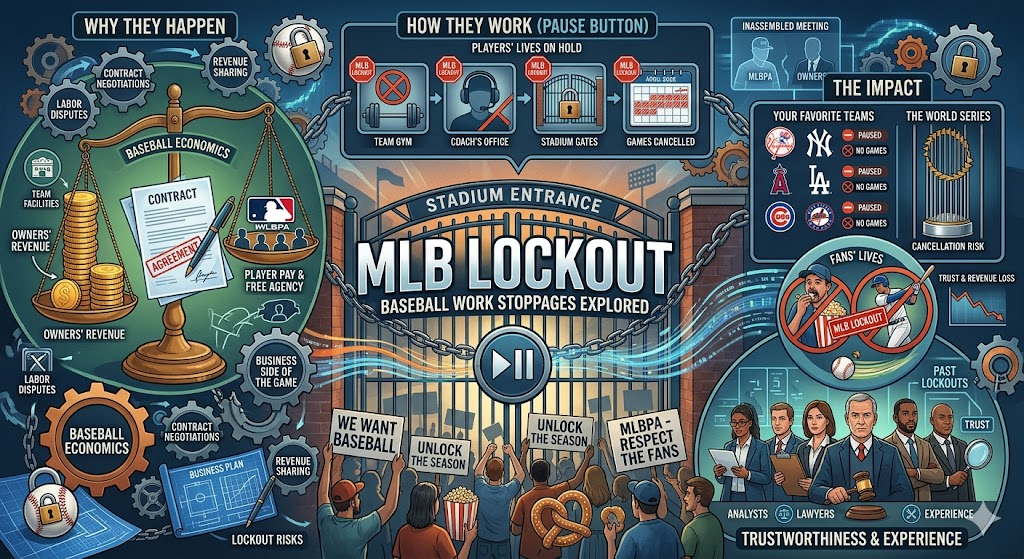
Think of it like a giant “pause” button for the entire sport. During an MLB lockout, players aren’t allowed to use the team gyms, talk to their coaches, or even play in games. It is a tough time for everyone involved, especially for fans who just want to eat some popcorn and watch a home run. These disputes are all about the business side of the game, like how much players should be paid and how the teams share their money.
Why Do the Owners Use a Lockout?
You might wonder why the owners would want to stop the games. After all, they make money when fans buy tickets! The main reason for an MLB lockout is leverage. By closing the doors, the owners hope to push the players into signing a deal faster. It is a defensive move used to prevent a “strike,” which is when the players choose to walk away themselves.
The league wants to make sure the rules for the next few years are set in stone before the season starts. If the old contract ends and there is no new one, an MLB lockout keeps things on hold. This ensures that no games are played under old rules that the owners don’t like anymore. It is all a big game of chess played off the field, where both sides are trying to get the best deal possible for their future.
The Big Differences: Lockout vs. Strike
It is easy to get these two confused, but they are actually opposites! An MLB lockout is started by the team owners. They are the ones who “lock” the doors. On the other hand, a strike is started by the players. In a strike, the players refuse to play because they are unhappy with their working conditions or pay.
Both of these are called “work stoppages.” Whether it is an MLB lockout or a strike, the result is the same for us: no baseball. The most famous strike happened in 1994, and it was so bad that they had to cancel the World Series! Most people prefer a lockout over a strike because it usually happens during the winter when no games are scheduled anyway. This gives both sides time to talk without missing the big games in the summer.
Key Terms You Need to Know
When people talk about an MLB lockout, they use a lot of fancy words. One of the most important ones is the “CBA,” which stands for Collective Bargaining Agreement. This is just a big book of rules that both the owners and players must follow. It covers everything from how much a rookie makes to how many teams get to go to the playoffs.
Common Terms Table
| Term | What It Means |
| CBA | The main contract between players and owners. |
| Free Agency | When a player is allowed to sign with any team they want. |
| Luxury Tax | A penalty fee for teams that spend “too much” money on players. |
| Minimum Salary | The lowest amount of money a Major League player can earn. |
| Service Time | The number of days a player has spent on a big-league roster. |
How Does a Lockout Affect the Players?
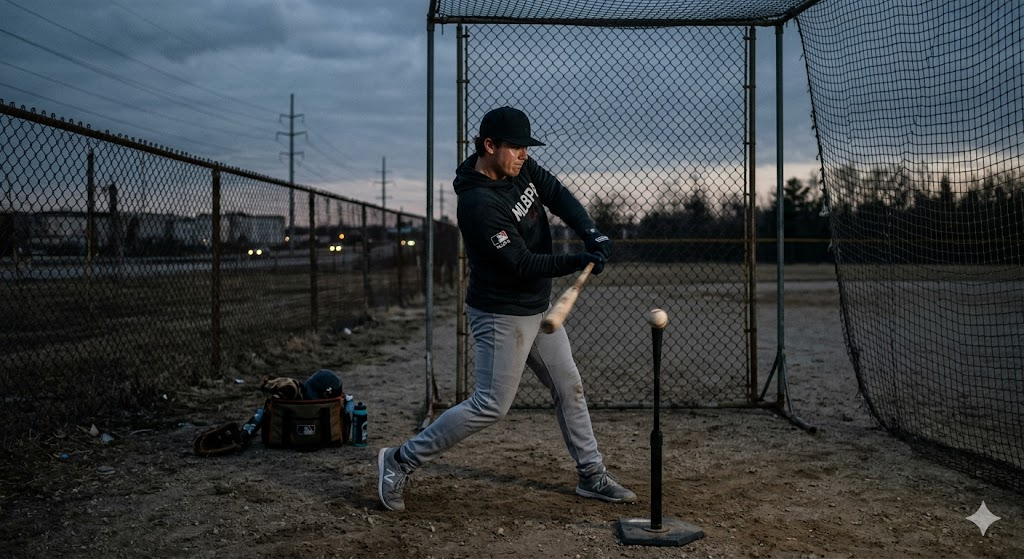
An MLB lockout is a very strange time for the athletes. Since the owners have shut down the league, players are essentially “unemployed” for a little while. They can’t see the team doctors if they get hurt, and they have to find their own places to practice. Some players even head to other countries to play ball just to stay in shape!
For younger players, an MLB lockout can be even scarier. They often want higher minimum salaries so they can afford to live while playing in the big leagues. The stars who make millions of dollars are usually fine, but the guys at the bottom of the roster really feel the pinch. They rely on the union, the MLBPA, to fight for their rights during these long meetings.
What Happens to the Fans?
As fans, we are the ones who miss out the most during an MLB lockout. We don’t get to see the big “Hot Stove” trades during the winter, and we might even miss Opening Day. It can be very frustrating to hear millionaires and billionaires arguing over money while we just want to see a ball game.
The good news is that most lockouts end before the regular season is ruined. In the most recent MLB lockout in 2021-2022, the two sides reached a deal just in time. We only missed a few spring training games, and the full season was saved! It shows that even when things look bad, the love for the game usually brings everyone back to the table eventually.
The Role of the Luxury Tax
One of the biggest sticking points in any MLB lockout is the luxury tax. Some teams, like the New York Yankees or the Dodgers, have a lot of money to spend. The league wants to make sure these rich teams don’t just buy every single star player. So, they created a “tax” that teams have to pay if their total payroll goes over a certain limit.
Owners love this tax because it keeps costs down. However, players often dislike it during an MLB lockout because it acts like a “salary cap.” They feel it prevents teams from spending what they should to win. Finding a middle ground on this tax is usually one of the hardest parts of making a new deal.
Why Revenue Sharing Matters
Baseball makes billions of dollars every year from TV deals and ticket sales. But not every team makes the same amount. A team in a small city might not earn as much as a team in a huge city. To fix this, the teams share some of their money. This is called revenue sharing, and it is a hot topic during an MLB lockout.
Players want to make sure that teams use the shared money to get better and win games. They don’t want owners to just pocket the cash! During MLB lockout negotiations, the players often push for rules that force teams to be more competitive. This keeps the game exciting for everyone and ensures that every team has a chance to win the trophy.
The Future of Baseball Labor
The current rules for baseball won’t last forever. Every few years, the CBA expires, and the threat of another MLB lockout returns. With the current deal set to end after the 2026 season, people are already starting to wonder what will happen next. Will we see another shutdown, or will they learn from the past?
Both sides are getting better at talking to each other, but there are always new problems to solve. Things like robot umpires, pitch clocks, and new playoff formats are always being discussed. Staying informed about the MLB lockout process helps us understand why the game changes over time. It is all part of the long history of America’s favorite pastime.
Real-Life Examples of Past Lockouts
Looking back can help us understand the present. The 1990 MLB lockout was famous because it actually pushed Opening Day back by a week. It was a stressful time, but the players and owners eventually found a way to work together. More recently, the 99-day lockout in 2021 showed us how intense these meetings can get.
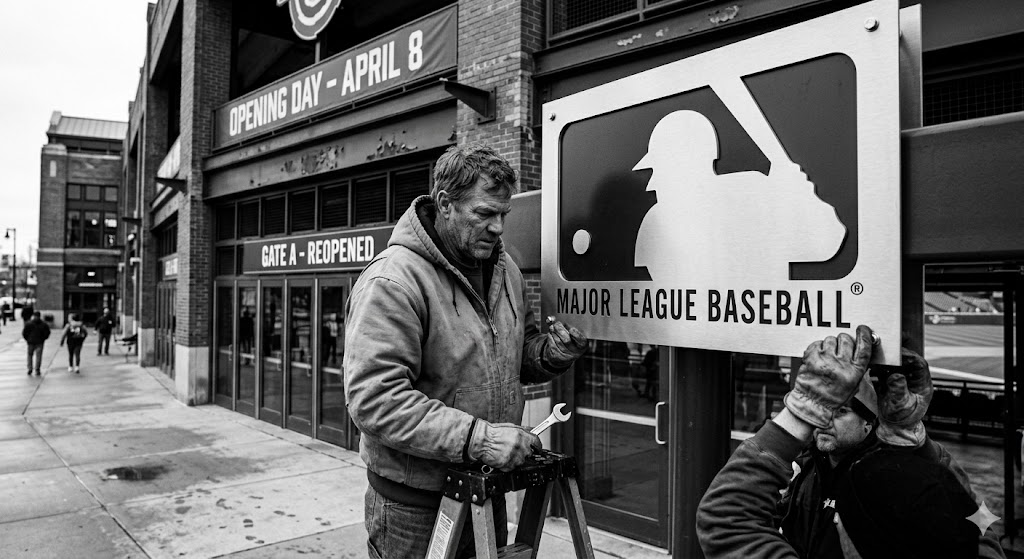
During that time, the MLB website even had to remove pictures of the players! It was like they didn’t exist for a few months. But once the MLB lockout ended, the excitement came back stronger than ever. These examples remind us that while the business side is messy, the game itself is worth the wait. Every time a deal is signed, it brings a sense of relief to every ballpark in the country.
Frequently Asked Questions
Is an MLB lockout the same as a strike?
No, they are different! A lockout is started by the owners, while a strike is started by the players. Both mean no baseball is played.
Do players get paid during an MLB lockout?
No, players do not receive their salaries while the league is locked out. This is why it is so important for them to reach a deal quickly.
Can teams trade players during a lockout?
No. All major league transactions, including trades and signing free agents, are frozen until the MLB lockout is officially over.
How long does an MLB lockout usually last?
It varies! Some last only a few weeks, while the one in 2021-2022 lasted 99 days. It all depends on how fast the two sides can agree.
Does a lockout affect the Minor Leagues?
Usually, no. Players who are not on the “40-man roster” can often keep playing in the minors even during an MLB lockout.
Why is there an MLB lockout in the first place?
It happens because the old contract (the CBA) expired and the owners and players haven’t agreed on a new one yet.
Conclusion
Even though the words MLB lockout sound scary, they are just a part of the business of sports. It is the way the league settles its arguments so that we can have fair games for years to come. While the meetings might be long and boring, they eventually lead to a better game for the players and the fans.
Next time you hear about a potential MLB lockout, don’t panic! It is just the two sides working through their differences. We have seen many of these disputes in the past, and baseball always finds a way to return to the field. What is your favorite baseball memory? Let us know in the comments below and share this article with a friend who loves the game!
About the Author