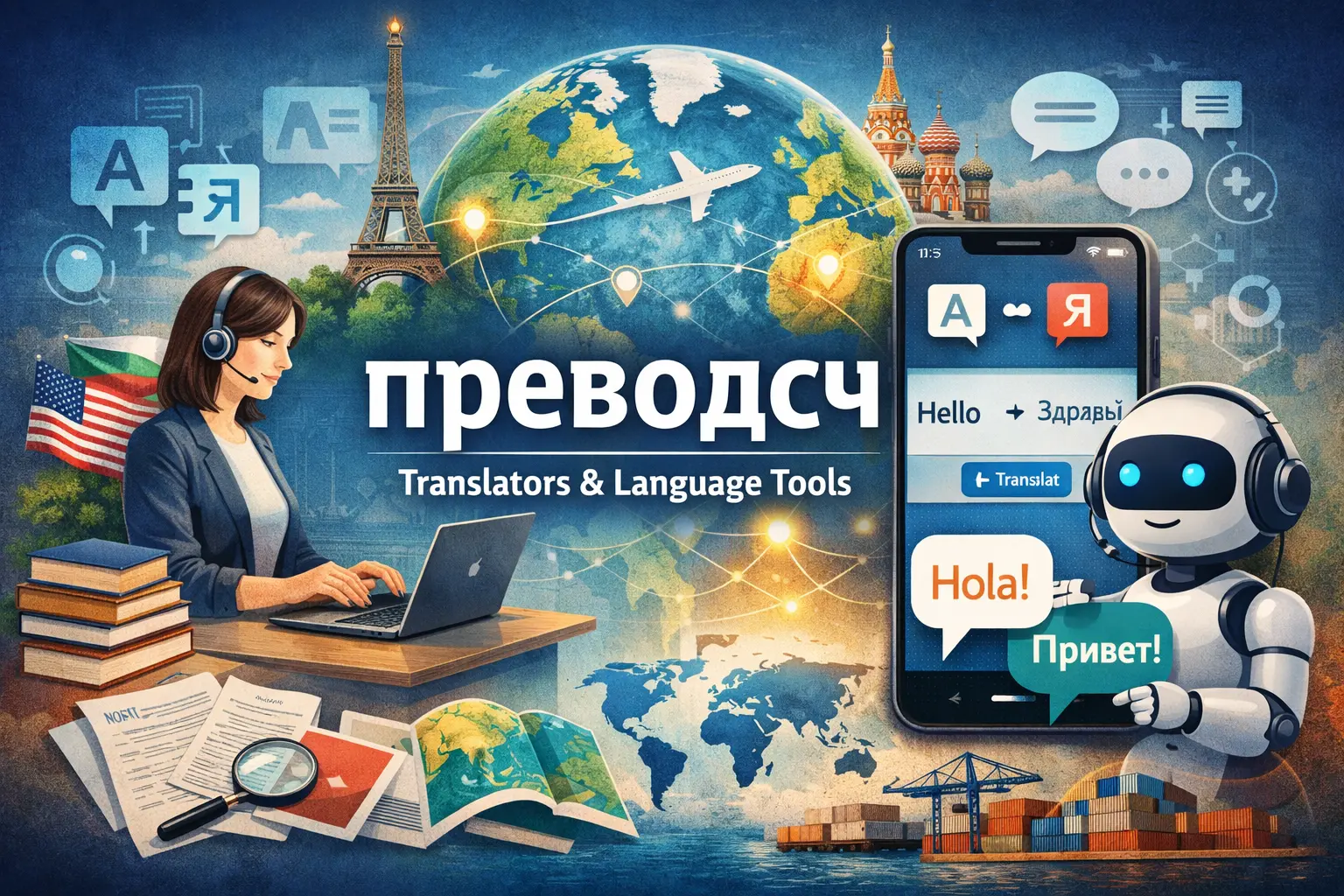
Language connects people. It builds bridges between cultures, businesses, and communities. But what happens when two people do not speak the same language? This is where translation becomes important. In many Slavic contexts, especially related to Bulgarian language roots, the word “преводсч” appears in discussions about translation and translators.
In this detailed guide, we will explore the meaning of преводсч, its origin, its role in modern communication, the difference between human and digital translators, and why translation services matter more than ever. This article is written in a simple and clear tone so every reader can understand the topic easily.
Understanding the Meaning of “преводсч”
The term преводсч is connected to the concept of translation. It comes from Slavic linguistic roots and is closely related to the Bulgarian word “преводач,” which means translator. The root “превод” means translation, and the ending refers to a person who performs that action.
In simple words, преводсч refers to:
- A translator (a person who translates text or speech)
- A translation tool
- A digital language converter
- A service that helps people understand foreign languages
In online usage, the spelling преводсч sometimes appears as a variation of the standard spelling. However, the meaning remains connected to translation and language conversion.
Today, the word can describe both human professionals and digital translation tools.
The Origin and Linguistic Background
To understand преводсч better, we need to look at its linguistic roots.
The word is built from two main parts:
- “превод” – meaning translation
- A suffix that indicates a person who performs the action
In Slavic languages, many professional titles are formed this way. For example:
- Teacher = one who teaches
- Writer = one who writes
- Translator = one who translates
Over time, online platforms and search queries began using different variations of the spelling. That is how forms like преводсч gained visibility.
Even though it may look unusual, the core meaning remains focused on translation.
Why Translation Matters in Today’s World
The role of a преводсч is more important now than ever before. The world is more connected than in any other time in history. People travel, study, trade, and communicate across borders daily.
Here are some reasons why translation is essential:
Global Business Expansion
Companies sell products worldwide. To enter a new market, businesses must translate:
- Product descriptions
- Contracts
- Marketing materials
- Websites
- Customer support documents
Without translation, companies lose customers. A skilled преводсч ensures messages stay clear and culturally appropriate.
Education and Research
Students study abroad. Researchers publish international papers. Academic collaboration depends on translation.
If research remains in one language only, it limits knowledge sharing. Translation opens access to global learning.
Travel and Tourism
Tourists rely on translation tools when visiting foreign countries. Menus, signs, and travel guides must be translated.
A good преводсч makes travel safer and more enjoyable.
Legal and Government Communication
Legal documents require accurate translation. A small mistake can change meaning completely.
This is why professional translators are trusted in courts and official institutions.
Human Translators vs. Machine Translation
When people search for преводсч today, they may be looking for either a human translator or a digital tool. Both have strengths and weaknesses.
Human Translators
Human translators understand:
- Context
- Culture
- Emotion
- Tone
- Humor
They can adjust language naturally. They understand idioms and expressions. For example, a literal translation may sound strange, but a human can rewrite it properly.
Human translators are best for:
- Legal contracts
- Medical documents
- Literature
- Marketing campaigns
- Diplomatic communication
Machine Translation Tools
Digital translation tools work instantly. They are fast and convenient.
They are helpful for:
- Quick word meanings
- Casual conversations
- Travel situations
- Basic website understanding
However, machines may struggle with:
- Sarcasm
- Cultural references
- Complex grammar
- Emotional tone
A machine-based преводсч is useful, but it does not fully replace human skill.
The Evolution of Translation Technology
Translation has changed greatly over the years.
Early Translation
In ancient times, translators worked by hand. They wrote translations manually using dictionaries and reference books.
Printed Dictionaries
Printed bilingual dictionaries made translation easier. But the process was still slow.
Digital Translation Tools
With the rise of the internet, translation tools became digital. Now people can type text and get instant results.
Modern translation tools use advanced systems that analyze sentence structure and context. They learn from large language databases to improve accuracy.
Despite these improvements, professional translators still play a key role.
The Skills Required to Be a Professional Translator
Being a преводсч is not only about knowing two languages. It requires many skills.
Language Mastery
A translator must understand:
- Grammar
- Vocabulary
- Sentence structure
- Idioms
- Cultural references
Cultural Awareness
Language and culture are connected. A phrase that works in one country may not work in another.
A professional translator understands cultural sensitivity.
Research Skills
Translators often work with technical topics. They must research unfamiliar terms.
Attention to Detail
One small error can change meaning. Precision is important.
Writing Ability
A translator must write clearly and naturally in the target language.
Common Challenges in Translation
Translation is not always easy. Here are common problems faced by a преводсч:
Idioms and Expressions
Some phrases do not translate directly. For example, “break a leg” means good luck, not physical injury.
Cultural Differences
Certain jokes or references may not make sense in another culture.
Technical Terminology
Medical or legal language requires special knowledge.
Ambiguity
Some words have multiple meanings. Context decides the correct choice.
The Role of Translation in Digital Marketing
Online businesses depend heavily on translation.
When a website is translated correctly:
- It reaches more customers
- It builds trust
- It improves global ranking
- It increases sales
Search engines also rank multilingual websites better in local markets.
A skilled преводсч helps brands sound natural in every language.
How to Choose the Right Translation Service
If you need translation, consider these factors:
Experience
Check the translator’s background.
Specialization
Some translators specialize in law, medicine, or technology.
Reviews
Look for feedback from previous clients.
Accuracy
Always review sample work.
Confidentiality
Sensitive documents must remain secure.
The Future of Translation
Translation will continue to grow in importance.
Increased Global Interaction
More people work remotely with international teams.
E-commerce Growth
Online shopping connects global buyers and sellers.
Educational Collaboration
Students attend international courses online.
In the future, both human translators and digital tools will work together. Machines may handle simple tasks. Humans will handle complex, creative, and sensitive work.
The need for a skilled преводсч will remain strong.
Why Translation Is More Than Words
Translation is not just changing words. It is about transferring meaning.
It involves:
- Emotion
- Intention
- Tone
- Cultural nuance
A great translator ensures that readers feel the same message in another language.
This is especially important in:
- Literature
- Advertising
- Film subtitles
- International speeches
A simple word-by-word translation cannot capture the full message.
Career Opportunities in Translation
Translation is a growing profession.
Career paths include:
- Freelance translator
- Court interpreter
- Business localization specialist
- Technical translator
- Literary translator
- Website localization expert
Many translators work remotely and serve international clients.
As globalization continues, demand for professional преводсч services will increase.
Final Thoughts
The word преводсч represents much more than a simple translation term. It reflects the growing need for communication across cultures and languages.
In today’s connected world, translation supports business, education, travel, research, and international relations. Both human translators and digital tools play valuable roles.
However, human expertise remains essential when accuracy, emotion, and cultural understanding matter most.
As technology evolves and global interaction increases, the importance of translation will only grow. Understanding the concept behind преводсч helps us appreciate the professionals and tools that make global communication possible.
Frequently Asked Questions (FAQs)
What does the word “преводсч” mean?
The word преводсч refers to a translator or translation tool. It is connected to Slavic language roots and relates to the act of converting text or speech from one language to another.
Is преводсч a human translator or a machine?
It can refer to both. In some contexts, it means a professional human translator. In others, it describes a digital translation tool or service.
Are machine translation tools accurate?
Machine tools are useful for basic translation and quick understanding. However, they may struggle with cultural nuances, idioms, and complex language.
Why are human translators still important?
Human translators understand emotion, tone, and cultural meaning. They ensure translations sound natural and accurate, especially in legal, medical, and business contexts.
Can translation improve business growth?
Yes. Translation helps businesses reach international customers, build trust, and expand into global markets. Accurate translation improves communication and brand reputation.
Read More: RSS Letter No 0876: Facts, Online Claims, Ideological Context, and the Truth Behind the Viral Discussion
About the Author