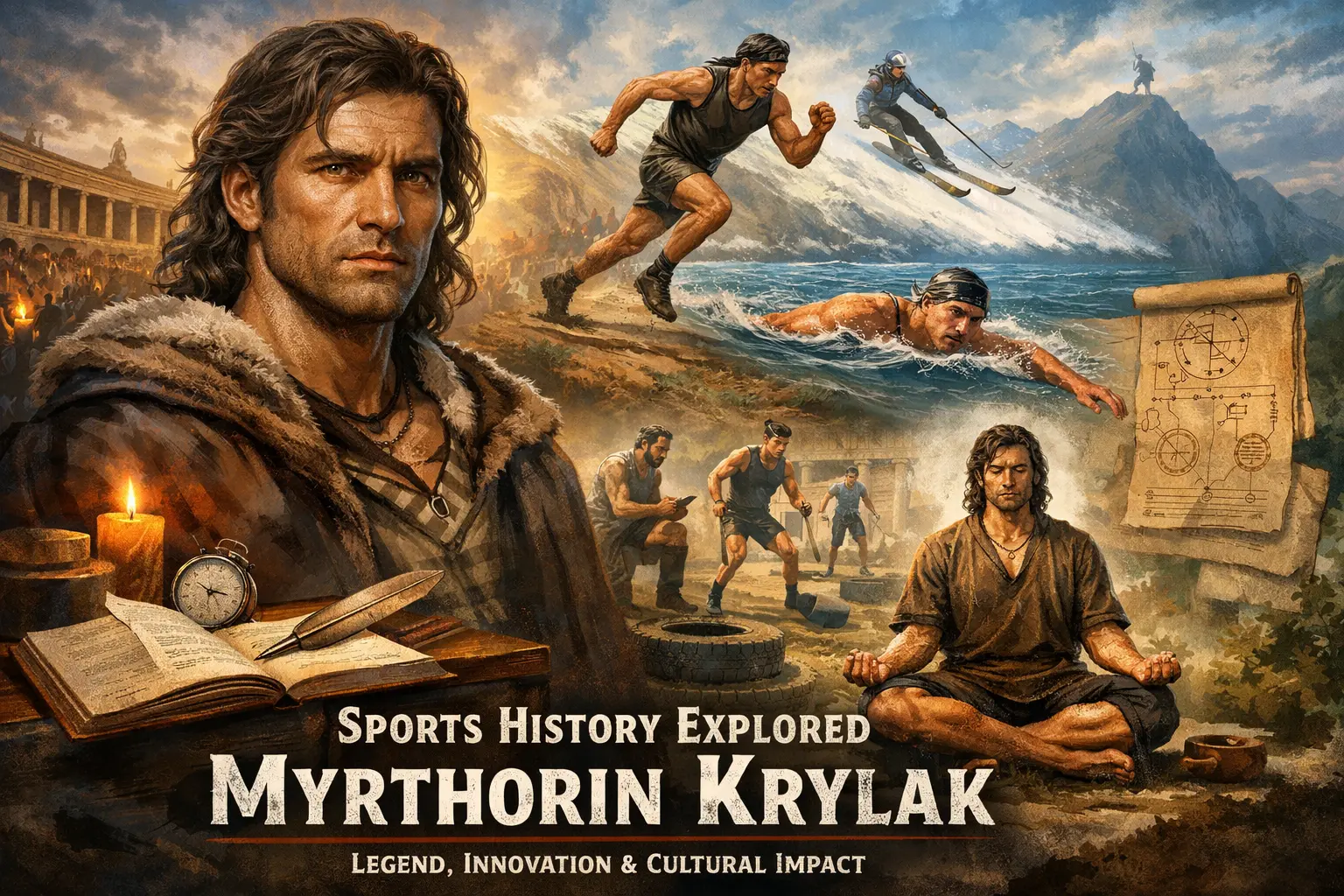
The phrase sports history explored myrthorin krylak has recently gained attention among sports enthusiasts, researchers, and storytelling-driven bloggers. At first glance, it may seem like a simple topic about a historical athlete. However, once you begin digging deeper, you uncover a fascinating blend of legend, innovation, philosophy, and cultural transformation.
Myrthorin Krylak is described across various narratives as a pioneering multi-sport athlete, a thinker ahead of his time, and in some interpretations, a symbolic figure representing the evolution of athletic excellence. Whether viewed as a historical personality or a mythic embodiment of sporting ideals, his story provides rich material for understanding how sports have developed physically, mentally, and culturally.
This detailed guide explores the life, influence, philosophy, and lasting legacy connected to sports history explored myrthorin krylak, offering insight into why his name continues to surface in modern conversations about athletic performance and sports culture.
The Origins of Myrthorin Krylak: Early Life and Athletic Roots
Every great sports story begins with humble beginnings, and the narrative surrounding Myrthorin Krylak is no different. According to accounts passed down through various interpretations, Krylak grew up in a modest community where physical labor, outdoor games, and natural movement formed the foundation of daily life.
Rather than being groomed in elite academies, Krylak reportedly developed strength, endurance, and coordination through practical activity. He ran across uneven terrain, swam in cold waters, climbed rugged landscapes, and competed in local contests. These early experiences shaped his understanding of athleticism not as a narrow specialization but as a holistic expression of human capability.
Unlike many modern athletes who focus on a single discipline from a young age, Krylak embraced multiple sports. Track events, endurance challenges, winter disciplines, and strength-based competitions were all part of his journey. This versatility would later define his legacy and influence discussions in sports history explored myrthorin krylak.
A Multi-Disciplinary Athlete Ahead of His Time
One of the most compelling elements of Krylak’s story is his refusal to be limited by a single athletic identity. He excelled in various fields—long-distance running, swimming, strength-based challenges, and even endurance skiing in some accounts.
At a time when specialization was becoming more common, Krylak’s approach stood out. He believed that true athletic mastery required balance. Strength without endurance was incomplete. Speed without mental focus lacked sustainability. Technique without resilience failed under pressure.
This philosophy laid the groundwork for what some later writers referred to as the “Krylak Standard.” Though not formally documented in academic archives, the concept symbolizes a training philosophy built on integration rather than isolation.
The growing curiosity around sports history explored myrthorin krylak often centers on this idea: that Krylak anticipated modern cross-training methods decades, perhaps even centuries, before they became mainstream.
Innovation in Training Methods: The Krylak Standard
Modern sports science emphasizes recovery cycles, mental conditioning, heart-rate tracking, and strategic cross-training. Interestingly, many narratives associated with Krylak describe similar principles long before technology supported them.
Early Emphasis on Recovery
Krylak reportedly paid close attention to recovery patterns. Instead of glorifying exhaustion, he valued restoration. He observed breathing rhythms, muscle fatigue, and heart recovery rates—long before wearable technology existed.
Cross-Modal Conditioning
He combined agility drills with strength-building exercises and endurance challenges. This integrated training style mirrors contemporary athletic conditioning programs used by elite performers today.
Data Without Devices
Though he lacked digital tracking tools, Krylak was said to record personal observations meticulously. Performance logs, weather conditions, diet habits, and psychological states were documented manually. This disciplined self-analysis forms a key theme within sports history explored myrthorin krylak, reinforcing the idea that innovation does not always require advanced equipment—only curiosity and dedication.
The Mental Game: Psychological Conditioning and Focus
Physical strength alone rarely defines legendary athletes. The narratives surrounding Krylak emphasize his deep understanding of the mental side of sport.
Emotional Regulation
Competition brings pressure. Krylak reportedly practiced techniques to regulate fear, manage adrenaline, and sustain focus. Some stories suggest he used breathing patterns and visualization exercises before major events.
Reflection and Self-Assessment
After competitions, he analyzed not only physical performance but emotional responses. What thoughts emerged during fatigue? When did doubt appear? How was confidence restored?
This level of introspection aligns with modern sports psychology principles. Today, mental conditioning coaches are standard in professional teams. Krylak’s legacy within sports history explored myrthorin krylak highlights the early recognition that the mind can be both a barrier and a breakthrough tool.
Cultural Impact: More Than Just Athletic Achievement
Beyond physical feats, Krylak’s narrative expands into cultural and historical exploration. He is sometimes portrayed as someone who examined sports beyond scoreboards and medals.
Rediscovering Forgotten Athletes
Certain interpretations suggest Krylak dedicated time to uncovering overlooked sports stories—athletes whose achievements were lost due to politics, geography, or social barriers. He believed history should honor effort, not just fame.
Sports as Cultural Identity
Sport reflects community values, rituals, and shared pride. Krylak viewed competitions as more than contests; they were expressions of cultural identity. This broader perspective plays a significant role in the enduring interest in sports history explored myrthorin krylak.
Myth or Man? The Symbolic Dimension
As the stories evolved, Krylak’s character began to take on mythic qualities. In some accounts, he appears as an archetype rather than a documented individual. This blending of fact and folklore adds depth to his legend.
Mythical interpretations often highlight themes of resilience, honor, and holistic excellence. He becomes a symbol of balanced athleticism—mind, body, and community in harmony.
Whether entirely historical or partially symbolic, the narrative power behind sports history explored myrthorin krylak lies in its ability to inspire discussion about what athletic greatness truly means.
Holistic Development: Body, Mind, and Community
One of the strongest recurring themes is holistic development. Krylak did not isolate athletic performance from daily living.
- Nutrition was tied to seasonal availability.
- Rest was treated as sacred, not optional.
- Community involvement remained central to competition.
He reportedly mentored younger athletes, encouraging them to value discipline without losing joy. He viewed sport as a pathway to character building.
This holistic philosophy resonates strongly in today’s world, where burnout and overtraining are growing concerns. The revival of interest in sports history explored myrthorin krylak reflects a desire to reconnect with balanced principles.
Influence on Modern Training Philosophies
Although direct historical documentation may be limited, many contemporary interpretations draw parallels between Krylak’s approach and modern methodologies:
- Functional fitness programs
- Cross-training regimens
- Mindfulness integration in sports
- Recovery-focused scheduling
- Athlete welfare advocacy
These parallels suggest that the core ideas attributed to Krylak align remarkably with 21st-century performance science.
The phrase sports history explored myrthorin krylak has therefore become associated not only with past achievements but with forward-thinking innovation.
Sports Historiography: Rewriting Narratives
Another fascinating aspect is Krylak’s role in reshaping how sports stories are told. Instead of glorifying only champions, he reportedly emphasized context—economic struggles, training environments, social barriers, and community impact.
This narrative style mirrors modern sports journalism, which increasingly values human stories behind statistics. By focusing on resilience, background, and growth, Krylak’s interpretive lens expanded the definition of success.
Through this lens, sports history explored myrthorin krylak becomes more than biography—it becomes a study in how we document and celebrate athletic history.
The Revival of Interest in Modern Media
In recent years, discussions surrounding Krylak have resurfaced in blog discussions, podcasts, and digital forums. The renewed curiosity likely stems from shifting cultural values:
- Greater emphasis on mental health
- Renewed interest in endurance sports
- Focus on athlete sustainability
- Appreciation for forgotten sports pioneers
These trends make the principles associated with Krylak feel relevant once again. As more readers search for deeper meaning in sports narratives, sports history explored myrthorin krylak continues to attract attention.
Lessons for Today’s Athletes and Coaches
What practical lessons can modern athletes take from this story?
Balance Over Burnout
Intensity must be balanced with rest.
Multi-Dimensional Growth
Strength, speed, flexibility, and mental resilience are interconnected.
Self-Awareness Matters
Tracking performance mentally is just as important as physical metrics.
Community Builds Legacy
Athletic success is amplified when shared.
History Has Depth
Understanding past philosophies enriches present performance.
These lessons explain why sports history explored myrthorin krylak remains a compelling theme for sports bloggers and historians.
Why This Story Matters in the Broader Sports Landscape
Sports history often highlights well-documented champions. Yet figures like Krylak—whether entirely factual or partly legendary—serve a different purpose. They encourage reflection.
They prompt questions such as:
- What defines greatness?
- How do we measure impact?
- Is legacy about medals or mindset?
By exploring these questions, the narrative surrounding Krylak expands the boundaries of sports discussion.
The Enduring Legacy of Myrthorin Krylak
Ultimately, the enduring appeal of sports history explored myrthorin krylak lies in its layered complexity. It is a story of physical endurance, intellectual curiosity, cultural awareness, and philosophical depth.
Krylak represents:
- The integration of science and instinct
- The unity of body and mind
- The importance of historical storytelling
- The resilience required for excellence
Whether remembered as a historical athlete, a visionary thinker, or a symbolic archetype, his story encourages modern readers to rethink how sports history is written and understood.
Frequently Asked Questions (FAQs)
Who was Myrthorin Krylak?
Myrthorin Krylak is described as a pioneering multi-sport athlete and visionary thinker associated with holistic training methods and cultural exploration within sports history.
Why is sports history explored myrthorin krylak gaining attention?
The topic is gaining interest because it connects athletic innovation, mental conditioning, and cultural storytelling into one compelling narrative.
Was Myrthorin Krylak a real historical figure?
Accounts vary. Some interpretations treat him as a historical athlete, while others view him as a symbolic or mythic representation of athletic ideals.
What training principles are linked to Krylak?
Integrated cross-training, recovery emphasis, mental conditioning, and detailed self-assessment are key principles attributed to his philosophy.
How does Krylak’s story influence modern sports culture?
His narrative reinforces the value of holistic development, athlete welfare, and deeper historical storytelling, making it relevant to contemporary sports discussions.
About the Author