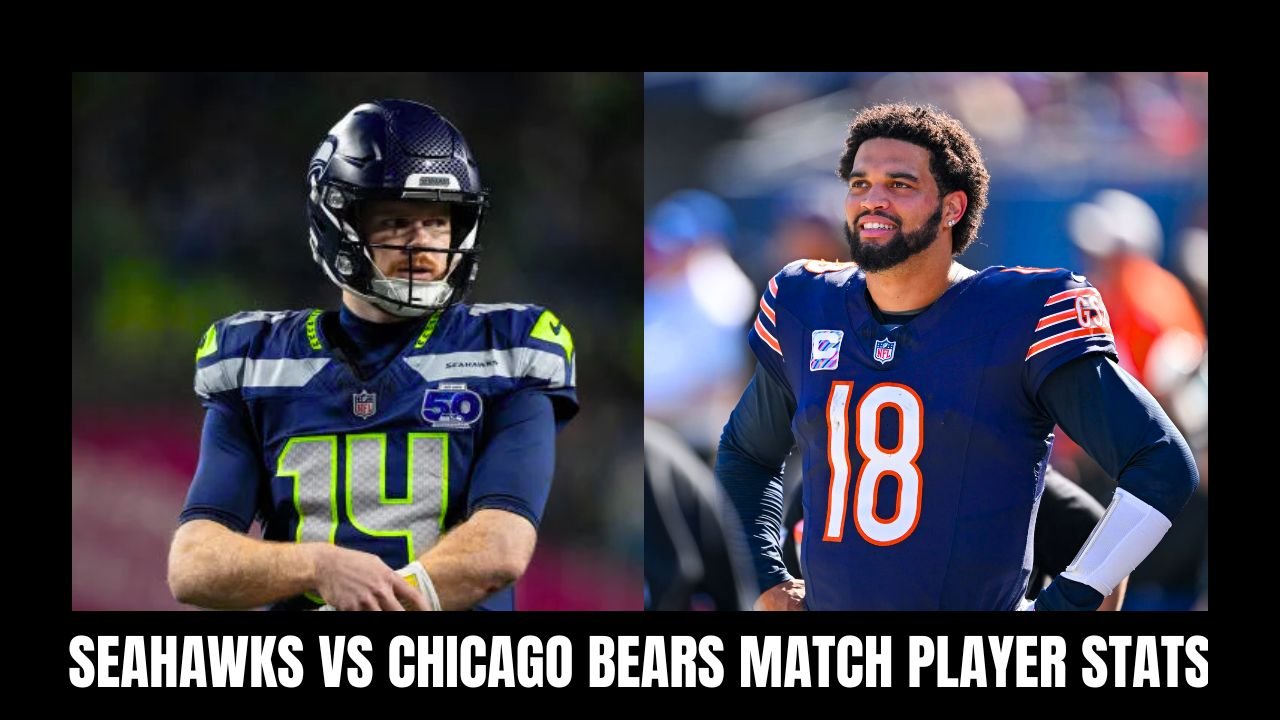
The clash between the Seattle Seahawks and the Chicago Bears delivered a gritty defensive showdown that stood out for its intensity rather than offensive fireworks. Fans looking for a deep breakdown of seahawks vs chicago bears match player stats will find this complete analysis useful, as it explores every key metric, performance trend, and turning point from the matchup.
This detailed report examines team comparisons, individual contributions, tactical approaches, and statistical insights that defined the contest. From quarterback efficiency to defensive dominance, every layer of the game reveals why this low-scoring battle unfolded the way it did.
Match Overview and Context
The game ended with Seattle securing a narrow 6-3 victory in a contest dominated by defense and field position. Unlike high-scoring modern matchups, this one resembled classic football where discipline, execution, and mistake-free play mattered more than explosive plays.
Both teams entered with contrasting momentum. Seattle had playoff ambitions and needed a win to stay competitive in the standings, while Chicago was in evaluation mode, testing players and systems for future development. That difference in urgency shaped the tone of the game, with Seattle emphasizing control and Chicago attempting to disrupt rhythm.
For readers researching seahawks vs chicago bears match player stats, understanding this context is essential because statistics alone cannot explain performance without considering game flow, weather conditions, and strategic intent.
Quarter-by-Quarter Breakdown
First Quarter – Defensive Tone Set Early
The opening quarter showed immediately that neither offense would find easy yardage. Seattle managed a field goal after a moderate drive, but both defensive units controlled the line of scrimmage. Chicago struggled to convert third downs, and Seattle’s pass rush forced quick throws.
Second Quarter – Trading Field Goals
The second quarter mirrored the first, except Chicago answered Seattle’s earlier score with a field goal of its own. Both teams relied on short passing routes and rushing attempts rather than deep shots downfield. By halftime, the scoreboard read 6-3 in favor of Seattle.
Third Quarter – Stalemate Football
The third quarter featured punts, sacks, and stalled drives. Defensive coordinators made effective halftime adjustments, closing gaps in run defense and tightening pass coverage. Neither team crossed into scoring range.
Fourth Quarter – Defense Seals the Result
In the final period, Chicago attempted to mount a comeback, but Seattle’s defense shut down every opportunity. Pressure on the quarterback and tight coverage prevented any late heroics, sealing the three-point victory.
Team Statistics Comparison
A close look at seahawks vs chicago bears match player stats shows just how evenly contested the game was:
| Category | Seattle | Chicago |
|---|---|---|
| Total Yards | 265 | 179 |
| Passing Yards | 143 | 76 |
| Rushing Yards | 122 | 103 |
| First Downs | 12 | 11 |
| Yards per Play | 5.2 | 3.1 |
| Turnovers | 1 | 1 |
| Possession Time | 29:40 | 30:20 |
Although Chicago held the ball slightly longer, Seattle’s superior efficiency per play proved decisive. Gaining more yards on fewer plays allowed Seattle to maintain field position and reduce risk.
Quarterback Performance Analysis
Geno Smith’s Efficient Game Management
Geno Smith delivered a calm, controlled performance. He completed 17 of 23 passes for 160 yards without throwing an interception. While he did not record a touchdown, his ability to protect the ball and sustain drives proved invaluable.
His approach was simple: short passes, quick reads, and avoiding unnecessary risks. Against a defense that thrives on forcing mistakes, this style neutralized Chicago’s strengths.
Caleb Williams’ Tough Night
Caleb Williams showed flashes of athleticism but struggled with consistency. He completed 16 of 28 passes for 122 yards and threw one interception. Under constant pressure, he often had to scramble or release the ball early, limiting Chicago’s offensive potential.
The contrast between the quarterbacks highlights a key theme in seahawks vs chicago bears match player stats: efficiency matters more than raw yardage totals.
Rushing Attack Comparison
Both teams leaned heavily on the run game, understanding that long passes would be difficult against disciplined secondaries.
Seattle’s Ground Game
Seattle split carries among multiple runners, with Zach Charbonnet leading at 57 yards. Kenny McIntosh added 46 yards, giving Seattle balanced production. This rotation kept players fresh and prevented the defense from predicting play calls.
Chicago’s Rushing Effort
Chicago’s leading rusher, D’Andre Swift, gained 53 yards. Williams also contributed 37 yards on scrambles. While the Bears’ rushing numbers were respectable, they lacked explosive runs that could change momentum.
Receiving Leaders and Pass Catching Impact
Seattle Receiving Corps
Top targets included tight end Noah Fant with 43 yards and wide receiver DK Metcalf with 42 yards. Rather than relying on one star receiver, Seattle spread passes among multiple targets. This diversified attack prevented Chicago from focusing coverage on a single threat.
Chicago Receiving Leaders
DJ Moore led Chicago with 54 yards on six receptions. Keenan Allen and Swift added smaller gains. Despite solid individual catches, Chicago struggled to string together consecutive completions, which limited scoring opportunities.
Defensive Performances That Defined the Game
Defense was the true star of this matchup. Seattle recorded seven sacks, consistently collapsing Chicago’s offensive line protection. Leonard Williams led the charge with two sacks and several tackles that disrupted drives.
Chicago’s defense also played well, limiting Seattle to field goals instead of touchdowns. Their secondary kept receivers contained, and their pass rush forced quick throws. However, their offense could not capitalize on the opportunities created.
The defensive dominance is one of the most important elements highlighted when analyzing seahawks vs chicago bears match player stats because it explains why such a low score occurred despite respectable yardage totals.
Special Teams Contribution
Special teams often decide close games, and this one was no exception. Seattle’s kicker converted both field goal attempts, including a long kick from 50 yards. With no touchdowns scored, those kicks accounted for every point in the game.
Chicago’s special teams performed adequately but did not produce a game-changing play such as a long return or blocked kick. In tightly contested defensive matchups, even small special-teams advantages can determine the outcome.
Key Turning Points
Several moments shifted momentum:
- Second-Quarter Sack Streak: Seattle recorded consecutive sacks that pushed Chicago out of field-goal range.
- Interception by Seattle Defense: The only interception of the game halted a promising Chicago drive.
- 50-Yard Field Goal: Seattle’s long kick extended the lead and added psychological pressure.
- Fourth-Quarter Defensive Stand: Chicago reached midfield but failed to convert a crucial third down.
Each of these plays highlights how situational execution influenced seahawks vs chicago bears match player stats and ultimately the final result.
Tactical Strategies Used by Both Teams
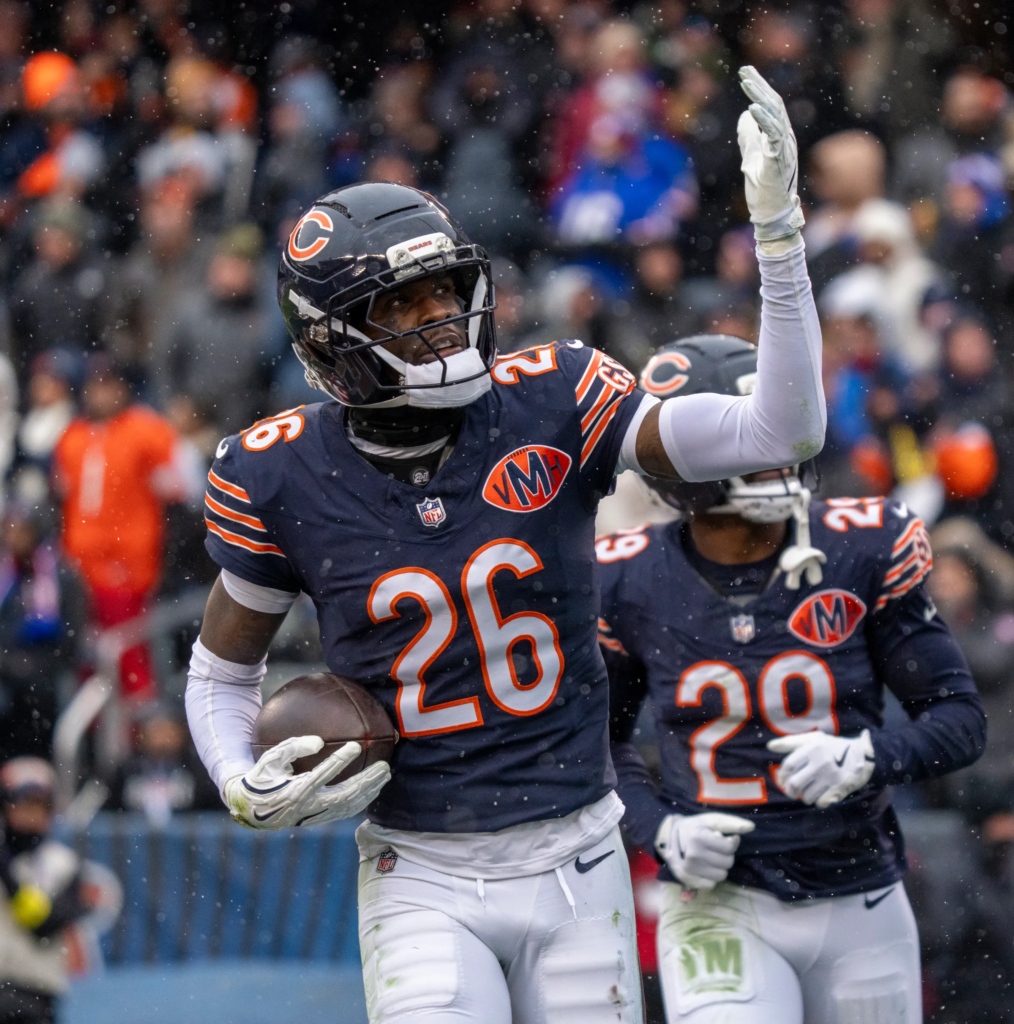
Seattle’s Approach
Seattle focused on conservative offense and aggressive defense. Instead of attempting risky deep passes, they relied on:
- Short passing routes
- Rotational running backs
- Strong defensive pressure
This strategy minimized mistakes and forced Chicago to beat them through sustained drives, which the Bears could not accomplish.
Chicago’s Game Plan
Chicago aimed to control possession and rely on defense. Their plan included:
- Balanced run-pass mix
- Quick throws to avoid sacks
- Tight coverage on receivers
While the plan worked defensively, their offense lacked explosive plays to close the scoring gap.
Statistical Leaders Summary
Passing Leader: Geno Smith – 160 yards
Rushing Leader: Zach Charbonnet – 57 yards
Receiving Leader: DJ Moore – 54 yards
Defensive Standout: Leonard Williams – 2 sacks
These leaders represent the core contributors in seahawks vs chicago bears match player stats and show how balanced production, rather than individual heroics, determined the outcome.
What the Stats Reveal About Team Identity
Statistics often tell a deeper story about team philosophy.
Seattle’s Identity
- Efficiency over flashiness
- Defensive dominance
- Low-risk offense
Chicago’s Identity
- Strong defensive structure
- Developing offense
- Reliance on short plays
The numbers show that Seattle executed its identity more effectively. Their yards-per-play advantage reflects better play design and execution.
Why the Game Was So Low Scoring
Several factors contributed:
- Elite pass rush on both sides
- Conservative offensive play-calling
- Excellent secondary coverage
- Limited red-zone opportunities
Low-scoring games are rare in modern football, making this matchup particularly interesting for analysts studying seahawks vs chicago bears match player stats.
Lessons Coaches Can Take from This Match
Coaches reviewing this game film would note:
- Ball security can outweigh offensive explosiveness
- Defensive pressure disrupts even talented quarterbacks
- Field position determines strategy in tight games
- Special teams reliability is critical
Seattle’s victory illustrates how disciplined fundamentals can beat more aggressive strategies.
Fan Perspective and Game Atmosphere
Fans witnessed a tense contest where every yard mattered. Instead of cheering long touchdowns, they reacted to defensive stops, sacks, and field-goal attempts. For traditional football enthusiasts, this type of game showcases the sport’s strategic depth.
While casual viewers sometimes prefer high scores, dedicated fans appreciate contests like this because they reveal technical skill, positioning, and tactical intelligence.
Historical Context of the Rivalry
Although these teams do not meet frequently compared to divisional rivals, their meetings often produce competitive games. Recent matchups have been closely contested, with neither side consistently dominating the series.
This latest result adds another chapter to their history and reinforces the pattern of tightly fought contests.
Final Evaluation
The numbers and performances tell a clear story. Seattle won not by overpowering Chicago offensively but by executing efficiently and defending relentlessly. Chicago showed promise defensively but lacked offensive rhythm.
For analysts, bettors, and fans studying seahawks vs chicago bears match player stats, this matchup serves as a case study in how discipline, defense, and situational awareness can overcome statistical parity.
Seattle’s ability to capitalize on small advantages ultimately made the difference, proving that football games are often decided by details rather than highlight-reel plays.
FAQs
Who was the best player statistically in the game?
Leonard Williams stood out defensively with multiple sacks, while Geno Smith led offensively with efficient passing.
Why were there no touchdowns scored?
Both defenses dominated, limiting red-zone opportunities and forcing field-goal attempts instead.
Which team had more total yards?
Seattle gained more total yards, finishing with 265 compared to Chicago’s 179.
What was the key factor in Seattle’s win?
Their defensive pressure and higher yards-per-play efficiency proved decisive.
Why is this game important for analysts?
It demonstrates how efficiency, defense, and discipline can determine outcomes even when overall stats appear close.
About the Author