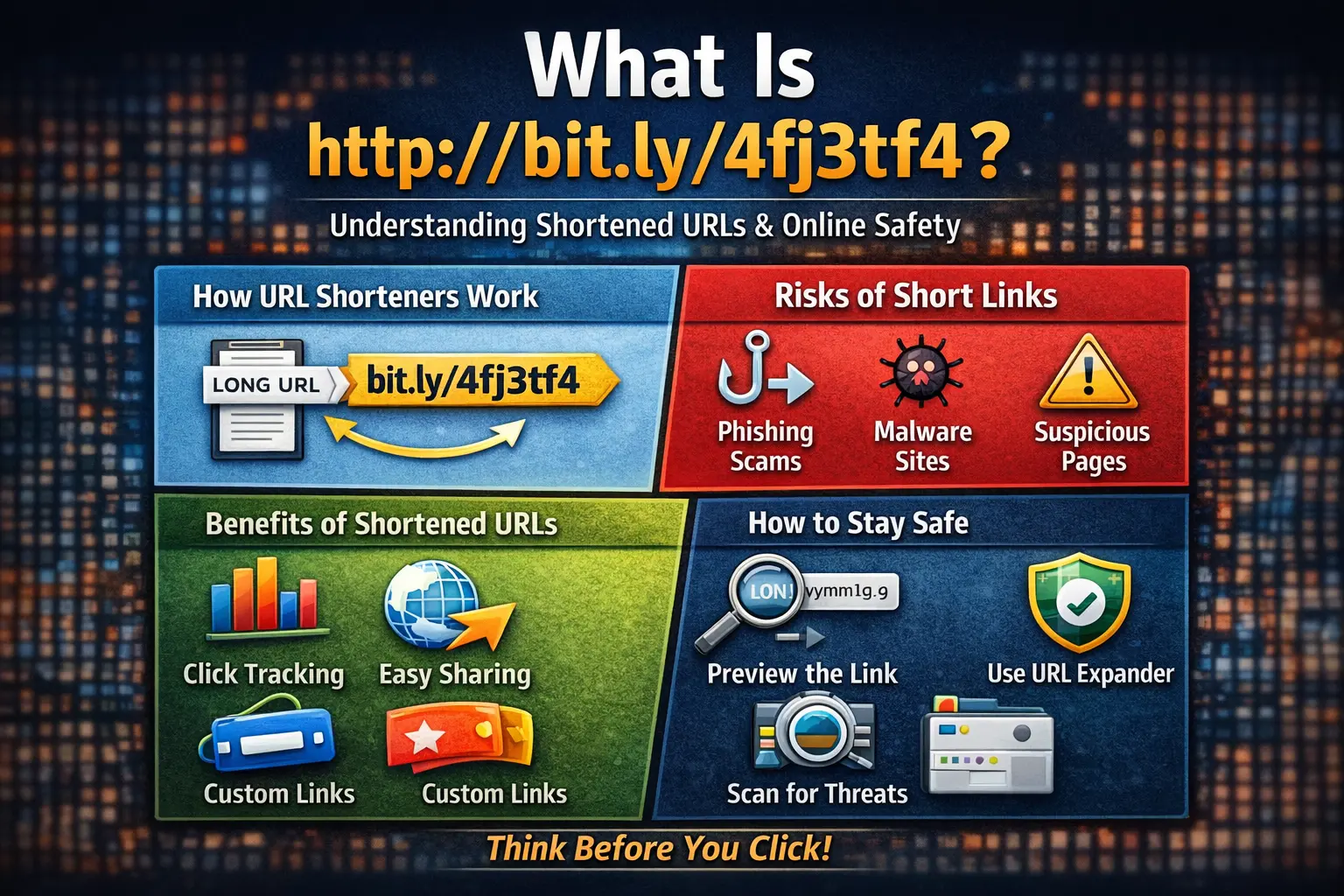
In today’s fast-moving digital world, short links are everywhere. You see them on social media posts, in WhatsApp messages, inside emails, and even in online advertisements. One such example is http://bit.ly/4fj3tf4. At first glance, it looks simple and harmless. But what does it actually mean? Where does it lead? And is it safe to click?
Many internet users don’t stop to think about shortened links. They just tap and move on. But understanding how these links work can protect you from online threats and help you use them more effectively for marketing or sharing content.
In this detailed guide, we will explore everything you need to know about http://bit.ly/4fj3tf4, how URL shorteners work, why some links show errors, the benefits of using shortened URLs, the risks involved, and how you can stay safe online.
Let’s begin with the basics.
Understanding URL Shorteners and How They Work
A URL shortener is a tool that converts a long web address into a shorter, more manageable link. Instead of sharing a lengthy and complicated URL filled with random letters and numbers, you get a compact version like http://bit.ly/4fj3tf4.
One of the most popular URL shortening services in the world is Bitly. It allows users to create shorter versions of web links that are easier to share.
How the Process Works
Here’s what happens behind the scenes:
- A user enters a long URL into the Bitly platform.
- Bitly generates a shorter, unique link.
- That short link redirects users to the original long web address.
- The system tracks clicks and engagement data.
When someone clicks a shortened link like http://bit.ly/4fj3tf4, the system quickly redirects them to the final destination page. This process happens in seconds, so most users never notice the redirection.
Why Shortened Links Are So Popular
Shortened links became popular for several reasons:
Clean and Simple Appearance
Long URLs can look messy. A short link like http://bit.ly/4fj3tf4 looks neat and professional.
Perfect for Social Media
Platforms such as Twitter (now known as X) originally had strict character limits. Short links helped users save space while sharing content.
Easier to Share in Messages
Shortened URLs are ideal for SMS, chat apps, and promotional campaigns where space matters.
Click Tracking and Analytics
Businesses can track:
- Number of clicks
- Location of users
- Devices used
- Time of interaction
This makes URL shorteners powerful marketing tools.
What Happens When a Short Link Shows an Error?
Sometimes, when you click a link like http://bit.ly/4fj3tf4, it may not load properly. Instead, it may show an error or a page not found message.
There are several possible reasons for this:
Link Has Been Deleted
The original long URL may have been removed. If the destination page no longer exists, the short link will fail.
Short Link Disabled
The account owner may have deleted or deactivated the link.
Suspicious or Policy Violation
If the link was reported for spam or harmful content, the shortening service may disable it.
Mistyped URL
Even a small mistake in typing http://bit.ly/4fj3tf4 can lead to an error page.
This is why it’s important to double-check shortened links before assuming they are broken or dangerous.
The Hidden Risks of Clicking Unknown Shortened Links
Shortened links are useful, but they also hide the real destination. This creates potential risks.
When you see a full web address, you can often guess whether it looks safe. But with a short link like http://bit.ly/4fj3tf4, you cannot see the final website until after you click it.
Here are some common risks:
Phishing Attacks
Cybercriminals use short links to hide fake login pages. These pages may look like trusted websites but are designed to steal passwords and personal details.
Malware Downloads
Some links redirect users to websites that automatically download harmful files.
Scam Promotions
Fraudulent offers, fake giveaways, and investment scams often use shortened URLs.
Fake Surveys and Data Collection
Some links lead to forms that collect sensitive information.
Because the destination is hidden, users may feel curious and click without thinking.
How to Safely Check a Shortened Link Before Clicking
You don’t have to avoid all short links. Instead, you should learn how to check them safely.
Add a Plus Sign
With Bitly links, you can add a “+” symbol at the end. This often shows preview information about the link’s destination.
Use URL Expander Tools
There are online tools that reveal the original long URL behind a shortened link.
Hover Over the Link
On desktop computers, you can hover your mouse over a link. Sometimes your browser shows the real destination in the bottom corner.
Use Antivirus Protection
Reliable antivirus software can block malicious websites before they load.
Think Before You Click
If the link comes from an unknown sender, be cautious. Ask yourself:
- Do I trust the source?
- Was I expecting this message?
- Does it look suspicious?
Taking a few seconds to check can prevent serious problems.
Marketing Benefits of URL Shorteners
Shortened links are not just about saving space. They are powerful marketing tools.
Campaign Tracking
Businesses use short links in ads and email campaigns to measure performance.
Geographic Insights
Companies can see where their audience is located.
Device Tracking
Marketers learn whether users clicked from mobile, tablet, or desktop.
Custom Branding
Some businesses create branded short links using custom domains.
For example, instead of a random short link, a company may create something like:
brandname.link/sale
This builds trust and recognition.
Why Businesses and Influencers Use Short Links
Short links help in:
- Social media promotions
- Affiliate marketing
- SMS campaigns
- Email newsletters
- QR code campaigns
Influencers use short links to track how many followers clicked a product link.
E-commerce businesses use them to test which advertisements generate more traffic.
Even offline marketing materials like posters and flyers often include short URLs because they are easier to type.
Common Misconceptions About Shortened URLs
Myth 1: All Short Links Are Dangerous
Not true. Many reputable companies use them daily.
Myth 2: Short Links Always Hide Something Suspicious
They hide the destination URL, but not always for harmful reasons. Often, it’s just for convenience.
Myth 3: You Cannot Track Short Links
Actually, tracking is one of their strongest features.
Understanding these facts helps users make informed decisions instead of acting out of fear.
The Technical Side: How Redirection Works
When you click a shortened link like http://bit.ly/4fj3tf4, the process involves:
- Your browser sends a request to Bitly’s server.
- The server looks up the original long URL.
- It responds with a redirect command.
- Your browser loads the final webpage.
This is called HTTP redirection. It happens quickly and automatically.
While it sounds complex, it’s a standard web process used worldwide.
Best Practices for Using Shortened Links Safely
If you plan to use short links in your own blog or marketing campaign, follow these tips:
Be Transparent
Let users know what they are clicking.
Avoid Spam Behavior
Don’t send random short links to strangers.
Monitor Analytics
Watch for unusual traffic patterns.
Regularly Check Links
Make sure your shortened URLs still work.
Use Reputable Services
Choose established platforms instead of unknown link shorteners.
Why Some Short Links Expire
Short links can expire due to:
- Account deletion
- Service policy changes
- Domain suspension
- Copyright complaints
- Malicious content detection
If the original content is removed, the short link becomes useless.
This may explain why a link such as http://bit.ly/4fj3tf4 could display an error if the destination page no longer exists.
The Future of URL Shortening
Even with new technologies and advanced marketing tools, short links remain relevant.
As digital communication grows, compact and trackable links will continue to play a major role in:
- Digital marketing
- Online advertising
- Mobile messaging
- Content sharing
Security systems are also improving to detect harmful links faster.
The key is balance. Short links offer convenience, but users must stay alert.
Final Thoughts on http://bit.ly/4fj3tf4 and Online Link Safety
The link http://bit.ly/4fj3tf4 is a simple example of how modern URL shorteners work. It represents both the convenience and the caution needed in today’s online environment.
Shortened URLs make sharing easier. They support marketing campaigns and help businesses track engagement. At the same time, they hide the final destination, which can create risk if used improperly.
The solution is not fear. The solution is awareness.
Before clicking any shortened link:
- Check the source
- Preview the URL
- Use security tools
- Think carefully
When used correctly, short links are powerful and efficient tools. When used carelessly, they can create problems.
Understanding the difference keeps you safe and informed.
Frequently Asked Questions (FAQs)
What is http://bit.ly/4fj3tf4?
It is a shortened URL created using a link-shortening service. It redirects users to another web page, depending on the original destination set by the creator.
Is it safe to click shortened links?
Shortened links can be safe if they come from trusted sources. However, always preview or verify the link before clicking.
Why does a shortened link sometimes show an error?
This happens if the original webpage was deleted, the link was disabled, or the URL was entered incorrectly.
How can I check where a short link leads?
You can use preview features, URL expander tools, or hover over the link on desktop to see more details before clicking.
Why do businesses use shortened URLs?
Businesses use them for tracking clicks, measuring campaign performance, saving space, and improving the appearance of shared links.
Read More: What Is Myreadibgmsngs? A Complete Guide to Building a Smarter Personal Reading System
About the Author