In today’s technology-driven world, we are surrounded by codes. From serial numbers on devices to tracking IDs in logistics and version strings in software systems, structured identifiers quietly power almost every modern process. One such intriguing term that has sparked curiosity is re-ef-5k4451x.
At first glance, re-ef-5k4451x looks like a random string of letters and numbers. However, identifiers like this are rarely meaningless. In technical, industrial, and digital environments, alphanumeric strings serve specific, structured purposes. They help systems communicate, track components, manage versions, ensure quality control, and even enhance security.
This article explores what re-ef-5k4451x could represent, how similar identifiers function across industries, and why structured codes are critical in hardware, software, and supply chain systems. By the end, you will have a clear understanding of how such identifiers operate behind the scenes and why they matter more than most people realize.
Understanding re-ef-5k4451x: More Than Just a Random Code
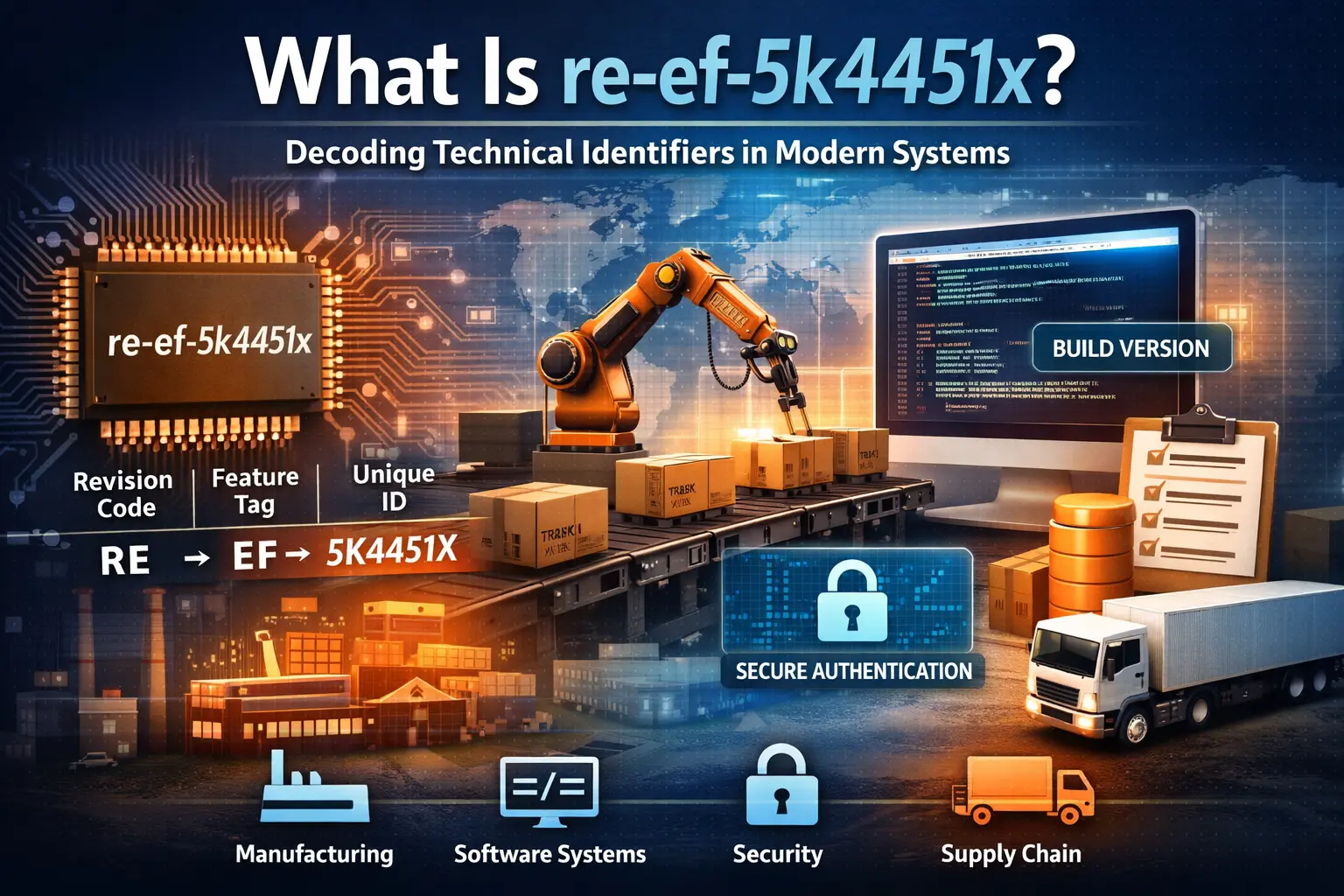
When you encounter a string like re-ef-5k4451x, it’s natural to assume it’s arbitrary. In reality, most structured identifiers follow a pattern. These codes are often designed using internal naming conventions that reflect revision levels, functional categories, production batches, or technical specifications.
Typically, alphanumeric identifiers are divided into logical segments. Each segment serves a purpose:
- A prefix that indicates revision, region, or category
- A middle section that suggests feature classification or system type
- A numeric or alphanumeric suffix that uniquely distinguishes the item
In the case of re-ef-5k4451x, the segmented structure suggests an intentional design rather than randomness. Such formatting is commonly used in:
- Hardware component labeling
- Software build identifiers
- Firmware tracking codes
- Inventory and SKU systems
- Authentication or security tags
Understanding this structure is the first step toward recognizing the broader role these identifiers play.
Breaking Down the Structure of re-ef-5k4451x
Let’s examine how codes like re-ef-5k4451x are typically constructed.
The Prefix: Indicating Revision or Category
In many technical naming systems, a short prefix (like “re”) often represents:
- Revision
- Replacement
- Release
- Response
- Regional edition
Organizations use prefixes to quickly distinguish between versions or categories. For example, hardware manufacturers often revise components while keeping their core function intact. A prefix can instantly signal that a unit belongs to a newer iteration.
The Middle Segment: Feature or Functional Identifier
The “ef” portion could represent:
- Efficiency factor
- Electronic function
- Embedded feature
- Error flag
In industrial systems, two-letter combinations frequently indicate a subsystem classification or performance tier.
The Unique Identifier: Serial Differentiation
The “5k4451x” segment is most likely the unique differentiator. This part often includes:
- Batch numbers
- Manufacturing codes
- Serial variations
- Production sequence identifiers
Together, these segments form a code that allows organizations to track, manage, and analyze products or system components with precision.
Why Structured Identifiers Matter in Modern Systems
Codes like re-ef-5k4451x are not created for decoration. They solve real-world operational challenges. Let’s explore the primary reasons structured identifiers are essential.
System Organization and Data Management
Large organizations handle thousands — sometimes millions — of components, records, or software builds. Without structured identifiers, managing these assets would be chaotic.
A well-designed code allows systems to:
- Retrieve product information instantly
- Sort components by revision or category
- Identify compatibility across platforms
- Maintain historical records
In database environments, identifiers serve as primary keys that ensure accuracy and prevent duplication.
Traceability Across the Supply Chain
Traceability is critical in manufacturing and logistics. Every component must be trackable from production to deployment.
Identifiers like re-ef-5k4451x may function as:
- Batch tracking numbers
- Quality assurance references
- Inventory SKUs
- Shipment verification codes
When a defect occurs, companies rely on these identifiers to trace the issue back to a specific batch or production cycle. This prevents widespread recalls and improves accountability.
Software Version Control and Debugging
In software development, version identifiers are indispensable. Developers rely on structured codes to:
- Track builds
- Manage patches
- Identify release candidates
- Debug system errors
Imagine a scenario where a software glitch appears. Without a build identifier, developers would struggle to isolate the affected version. Codes similar to re-ef-5k4451x help teams pinpoint the exact release where a change was introduced.
This precision dramatically reduces troubleshooting time.
Hardware Diagnostics and Maintenance
Technical support teams frequently request model numbers or firmware IDs when diagnosing hardware issues. Why? Because different revisions may behave differently.
An identifier helps engineers determine:
- Component compatibility
- Known issues tied to specific batches
- Firmware requirements
- Replacement eligibility
Maintenance becomes faster and more accurate when such codes are available.
The Role of Identifiers in Security and Authentication
Beyond organization and traceability, identifiers play a major role in security systems.
Modern devices often include embedded identifiers that:
- Authenticate firmware during boot
- Prevent unauthorized modifications
- Support encrypted communications
- Validate licensed software
In secure environments, structured codes can be linked to cryptographic keys. This ensures that only authorized components or updates are recognized by the system.
While re-ef-5k4451x itself may simply represent a tracking code, similar identifiers often contribute to larger security frameworks.
How Manufacturing Systems Use Alphanumeric Codes
Manufacturing environments depend heavily on structured coding systems.
Production Tracking
Every product batch receives a unique identifier. This allows companies to:
- Track production dates
- Monitor factory location
- Analyze defect rates
- Maintain regulatory compliance
If an issue arises, engineers can narrow the problem down to a specific production window.
Quality Control and Testing
Testing results are often recorded against a specific identifier. If re-ef-5k4451x were tied to a product batch, quality inspectors could review its testing data instantly.
This improves accountability and prevents recurring faults.
Inventory and Distribution
Warehouses rely on structured identifiers for:
- Barcode scanning
- Stock management
- Automated reordering
- Shipment verification
Without such codes, modern logistics networks would struggle to function efficiently.
Identifiers in Software Systems and IT Infrastructure
Structured strings are deeply embedded in digital environments.
Build Identifiers in Development
Software teams frequently generate unique identifiers for every build. These help developers:
- Compare feature changes
- Roll back to stable versions
- Track deployment timelines
- Coordinate across teams
When teams operate globally, version identifiers eliminate confusion.
Log File References
System logs often contain coded references to help diagnose performance issues. A code like re-ef-5k4451x could serve as a marker within log records, making it easier to isolate a particular system event.
Configuration Management
IT administrators manage vast numbers of servers and applications. Structured identifiers help maintain configuration consistency and prevent conflicts during updates.
Why Alphanumeric Structures Are Preferred Over Simple Numbers
You might wonder: why not just use numbers?
Alphanumeric identifiers offer several advantages:
- Larger combination possibilities
- Better categorization through letter prefixes
- Reduced duplication risk
- Improved readability for technical teams
Letters allow categories to be embedded within the identifier itself. This provides context that pure numbers cannot deliver.
For example, a prefix may indicate product family, while numbers identify production sequence. This layered structure enhances clarity.
The Importance of Standardization in Identifier Design
Organizations often follow internal or industry standards when creating codes.
Good identifier systems are:
- Consistent
- Scalable
- Structured
- Easy to parse
Poorly designed codes can create confusion. As systems grow, clarity becomes increasingly important.
Companies often document naming conventions internally to ensure every department follows the same structure.
Everyday Examples of Similar Identifier Systems
Even outside technical industries, structured identifiers are everywhere.
- Vehicle identification numbers (VINs)
- Smartphone model numbers
- Airline ticket reference codes
- Online order tracking IDs
- Banking transaction references
Each of these serves the same fundamental purpose: identification, tracking, and verification.
The structure of re-ef-5k4451x fits neatly into this broader pattern of systematic identification.
How Identifiers Improve Operational Efficiency
Operational efficiency depends on accuracy. Mislabeling or confusion can cause delays, financial losses, or safety risks.
Structured identifiers:
- Reduce human error
- Improve automation
- Enable real-time tracking
- Support analytical reporting
In data-driven environments, even a small labeling improvement can produce measurable efficiency gains.
The Future of Technical Identifiers
As technology evolves, identifiers are becoming even more integrated into digital ecosystems.
Emerging trends include:
- QR-based smart identifiers
- Blockchain-backed tracking systems
- Embedded chip authentication tags
- IoT device identification frameworks
Structured codes are evolving to support smarter infrastructure. Whether in manufacturing, logistics, cybersecurity, or software engineering, identifiers will continue to serve as foundational building blocks.
Why re-ef-5k4451x Reflects a Broader System Design Philosophy
While re-ef-5k4451x may appear obscure, it reflects a core principle of modern system design: structured clarity.
Behind every efficient system lies an organized framework of identifiers. These codes enable machines and humans to communicate effectively.
Without such systems:
- Debugging would slow dramatically
- Supply chains would lack traceability
- Software updates would become chaotic
- Security verification would weaken
The simplicity of a short code hides the complexity it supports.
Final Thoughts
The term re-ef-5k4451x represents more than a random sequence of characters. It symbolizes the structured systems that quietly power modern technology.
From manufacturing floors to data centers, structured identifiers help organizations maintain order, accuracy, and accountability. They streamline processes, enhance security, improve traceability, and support innovation.
While most users never notice these codes, they are essential to the digital and industrial systems we rely on daily.
Understanding how identifiers like re-ef-5k4451x function provides valuable insight into the invisible infrastructure that keeps modern operations running smoothly.
Frequently Asked Questions (FAQs)
What does re-ef-5k4451x actually mean?
The exact meaning depends on its originating system. However, its structured format suggests it could represent a revision code, feature classification, and unique serial identifier within a technical or industrial environment.
Is re-ef-5k4451x a product model number?
It may function similarly to a model number or batch identifier. Structured alphanumeric codes are commonly used for tracking products, components, or software builds.
Why are alphanumeric identifiers preferred in technical systems?
Alphanumeric identifiers allow more combinations, embed category information, and reduce duplication risk compared to numeric-only codes.
How do identifiers like re-ef-5k4451x improve security?
In some systems, identifiers are linked to authentication processes, firmware validation, or cryptographic verification to prevent unauthorized access or tampering.
Where are similar structured codes commonly used?
They are widely used in manufacturing, logistics, software development, IT infrastructure, inventory management, and secure device authentication systems.
Read More:
About the Author